Indonesia’s Directorate General of Taxes (DGT) needed to modernize a complex legacy environment built on multiple database platforms, including an outdated version of Oracle Database. Because the system supports Indonesia’s national tax administration and government revenue collection, continuous availability was a critical requirement.
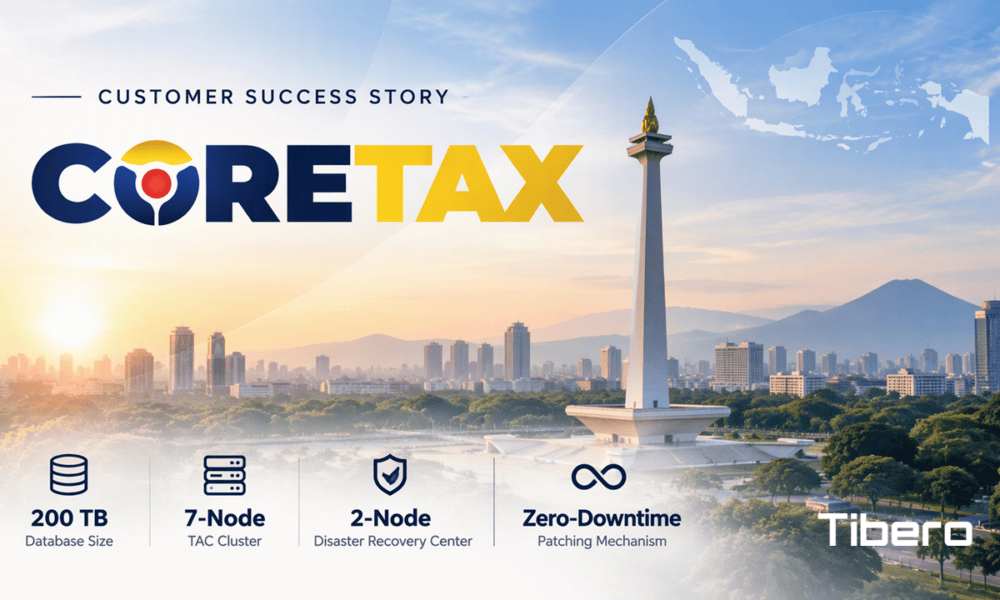
Coretax went live in January 2025 on an initial 2-node TAC cluster. As transaction volume increased following the consolidation of legacy systems, DGT progressively expanded the environment. Today, DGT operates a 7-node TAC cluster with a 200 TB database and a 2-node DRC(Disaster Recovery Center), supported by a zero-downtime patching mechanism designed to maintain normal transaction processing throughout the patching process.
Summary
- 200 TB Database Size
- 7-node Tibero TAC Cluster
- 2-node Disaster Recovery Center
- 2 to 7 TAC nodes Phased TAC Expansion
- Zero-downtime patching using the round-robin method
The Challenge: Modernizing a Complex Legacy Environment
DGT’s legacy system was built on multiple database platforms. Managing numerous database servers, each with different configurations and management requirements, increased operational complexity. Establishing a Disaster Recovery Center (DRC) across so many servers would also have been complicated.
Cost was another major consideration. Maintaining multiple database licenses across legacy systems was costly, while expanding with Oracle and consolidating the environment into a single cluster would require substantial additional investment.
DGT needed to simplify this environment while meeting requirements for performance, high availability, data integrity, scalability, and continuous 24/7 system operations.
Why Tibero?
Compatibility with Oracle was a key consideration in selecting the new DBMS. According to the project team, Tibero is 99% compatible with Oracle, and database objects such as tables, procedures, and views can most likely be used in the application. Technical compatibility assessments, a structured PoC, and workload-based performance validation provided the basis for the selection.
The objective was to reduce total cost of ownership, simplify database operations, and establish a flexible, reliable database platform aligned with future business requirements.
From Data Migration to a 7-Node TAC Cluster
Preparing for consolidation required a detailed review of existing application modules and business logic, along with data type optimization and database table relationships to maintain data consistency and integrity. The application platform used for the project was TDP.NET, with the necessary drivers and variables developed and configured during implementation.
Migrating the large volume of data from Oracle to Tibero required extensive ETL processing. The migration was carefully scheduled to minimize the impact on the existing legacy system. After verifying data consistency between the legacy system and Tibero, Coretax successfully went live in January 2025.
Following go-live, DGT observed a significant increase in transaction volume as the legacy systems were consolidated into the initial 2-node TAC cluster. To accommodate the growing workload, the environment was subsequently expanded in phases:
- January 2025: Coretax went live on a 2-node TAC cluster.
- April 2025: The TAC cluster expanded with 2 additional nodes.
- September–October 2025: Another 2 nodes were added.
- July 2026: The cluster expanded with 1 additional node, bringing the TAC cluster to 7 nodes.
Today, the Coretax environment spans 482 cores in total, including a 7-node TAC cluster with a 200 TB database, a 2-node DRC, and other Tibero instances used by application services supporting Coretax Production.
Maintaining Service Continuity with Zero-Downtime Patching
For a system that requires continuous 24/7 operation, patching must be carried out without interrupting normal transaction processing. Tibero addresses this requirement with a zero-downtime patching mechanism known as the round-robin method across the 7-node TAC cluster.
Patching is performed sequentially, one node at a time. Active transaction sessions on the node being patched are automatically redirected to available nodes by the cluster’s failover mechanism. Once patching is complete, the database instance is brought back online and resumes normal operation before the process moves to the next node.
This approach is designed to maintain normal transaction processing throughout the patching process, ensuring zero downtime for the overall system.
Recognized for Its Contribution to Coretax
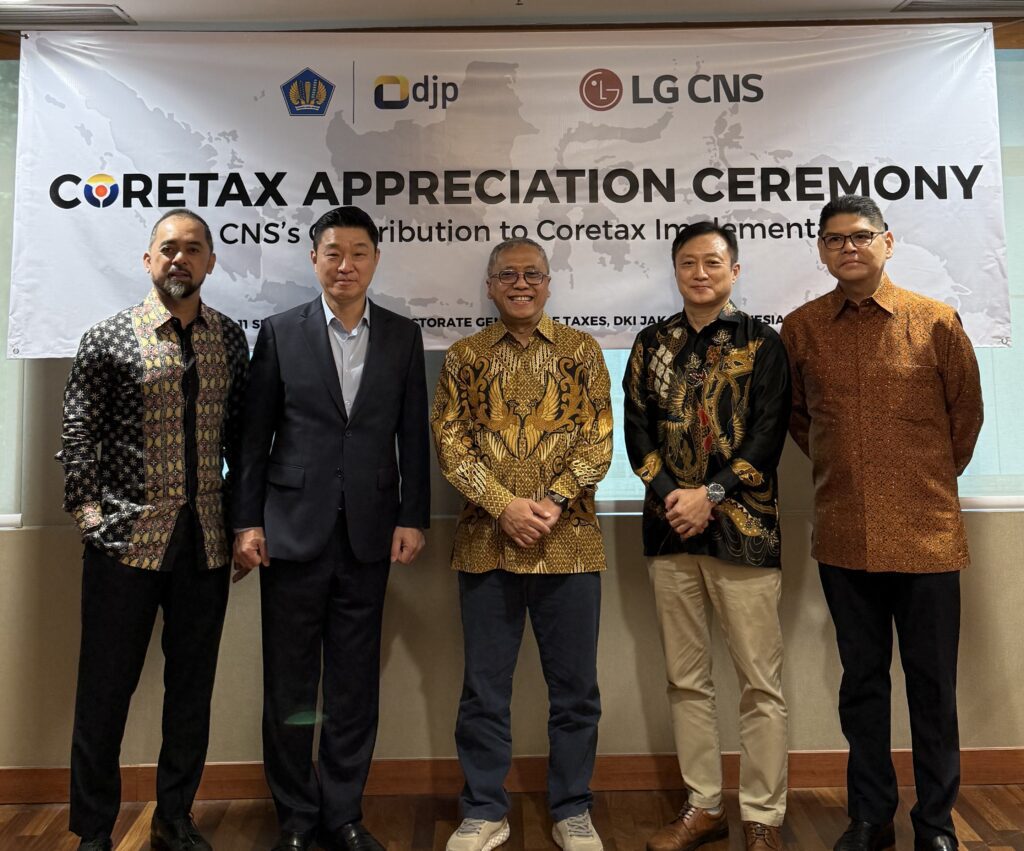
Tibero was recognized for its contribution to the successful database transition and stabilization of the Coretax system. As a key DBMS provider, Tibero was formally recognized for its role in supporting the project and joined the official event honoring key contributors to the Coretax initiative.
A Scalable Foundation for Mission-Critical Tax Administration
The Coretax project demonstrates how a complex legacy database environment can be modernized while addressing the performance, availability, data integrity, and scalability requirements of a large-scale national tax administration system.
By consolidating multiple legacy database sources with Tibero and progressively expanding the TAC cluster as transaction volume increased, DGT established a more unified database foundation to support Coretax.
Explore how Tibero can support your database modernization strategy.
Related Content
Tibero vs. Oracle: Enterprise DBMS Comparison
Explore Tibero and Oracle across compatibility and key enterprise database capabilities.
TAC (Tibero Active Cluster): A Powerful Alternative to Oracle RAC
Take a closer look at Tibero Active Cluster, including high availability, failover, and horizontal scaling.
Tibero7: Advancing the Enterprise Database Core for Mission-Critical Workloads
Explore Tibero7 technologies for performance, high availability, disaster recovery, and operational stability.


No Comment! Be the first one.